Members and affiliates

Agnessa Spanellis
Lab Director, and Senior Lecturer in Systems Thinking at the University of Edinburgh Business School
Her research focuses on gamified environments to help organisations understand complex systems and gamification as a new approach to improve organisational performance. Her other stream of research focuses on using gamification to improve social and environmental sustainability, especially in more deprived and impoverished communities in developing counties. She has worked with rural communities in Colombia, Indonesia, and Brazil and has recently published a book on systems thinking.

David Cole
Lab Deputy Director, and Innovation Strategist at the Global Research Innovation and Discovery centre, Heriot-Watt University
Dave is a software engineer, technologist and systems thinker. He is current role is Innovation Strategist at the Global Research, Innovation and Discovery Centre (GRID) at Heriot-Watt University. His main interest is understanding and healing the “crisis of perception” at the heart of our contemporary ecological poly-crises through the philosophy, ontology and epistemology of systems thinking. He is a game and XR developer, and experienced software developer using modern microservice architectures and cloud platforms. He holds a diploma and post graduate certificate in Systems Thinking in Practice (STiP) and is studying for the MSc in STiP at the Open University.

Nidhi Tripathi
Independent Consultant and Brand Strategist
Nidhi Tripathi is a marketing and communications professional with over 15 years of experience across brand strategy, internal communications, digital marketing, and culture-building. With a background in toy & game design and designing physical spaces, she approaches her work with curiosity, structure, and a focus on how people experience brands from the inside out. At Ericsson and MediaKind, she led global initiatives that brought clarity to brand narratives while strengthening team connection—whether through storytelling-led campaigns, recognition programs, or platforms that reflected real voices. She was closely involved in the transition from Ericsson Media Solutions to MediaKind, working to keep internal alignment and trust intact during a time of change. Earlier in her career, she co-founded two design-led ventures and explored how design, learning, and behavioural thinking intersect—something that continues to shape her work today. She believes in designing systems that feel human, inclusive, and grounded in everyday practice.

Stuart Rogan
Managing Director at Future Positive Consulting
Future Positive Consulting help organisations committed to business excellence to develop effective strategy, and the socio-technical systems and management capability they need to achieve sustainable success.

Peter Rogan
Director at Future Positive Consulting
Future Positive Consulting help organisations committed to business excellence to develop effective strategy, and the socio-technical systems and management capability they need to achieve sustainable success.

Sandy Louchart
Founder of Socks Off Studio
Socks Off Studio (Socks Off Games) is an Independent Game Studio and Game design/Serious Games consultancy based in Scotland. The studio advocates for the transformative power of games as an avenue for meaningful action and change and aims to achieve meaningful societal impact through its range of entertainment games and partnerships with research organisations. It’s founder, Dr Sandy Louchart received the Ph.D. degree in computer science from University of Salford, Salford, U.K., in 2006. He is also currently a Research Associate in Game Design at the University of Edinburgh Business School. Prior to joining the University of Edinburgh, Sandy led the development and implementation of the BSc (Hons) Immersive Systems Design (Games & VR / 3D Modelling) at the Glasgow School of Art and led/co-led research projects (EPSRC, EC) focused on the theoretical and practical applications of both interactive digital narratives (IDNs) and serious games to domains related to complexity and cyber-security and the design of co-creation processes. His research interests include the design, development, and application of serious games and IDN. His work has been published internationally since 2002 in over 80 conference, journal and book publications.

Elli-Maria (Elma) Charalampidou
Associate Professor at the Institute of GeoEnergy Engineering (IGE), Heriot-Watt University
Elma holds an MEng degree (first class honours, 5-years ptychio) in Civil Engineering from the Aristotle University of Thessaloniki (Greece), as well as a joint PhD in Material Science-Mechanics-Civil Engineering from the Grenoble Institute of Technology (France) and in Petroleum Engineering from Heriot-Watt University (HWU), which has grounded her research in experimental mechanics, material science, and non-destructive testing. She had research contracts in France (INPG Enterprise S.A.) and afterwards in Germany (German Research Centre for Geosciences, Helmholtz Centre Potsdam) as a PDRA in the EU-GEISER Project (Geothermal Energy FP7-ENERGY-2009). During her postdoctoral training, she researched, among others, seismology and risk management. Moreover, Elma developed a keen interest in the role of public acceptability on green energy storage and extraction (e.g., deep geothermal), which inspired her to become one of the HWU Leads in Public Engagement.
Elma leads the Earth Materials and Processes for Sustainable Development (EM-π) research group at IGE. Her research team's mission is to advance knowledge of the experimental and computational mechanics of earth materials (Hard Soils and Soft Rocks, Rocks) and artificial materials that mimic nature, to achieve the NET ZERO Goals (green energy storage, sustainable cities, zero waste and circular economy). Elma’s research group is particularly interested in community engagement via informal science learning and interaction with community groups, as well as in policy, to make their research findings more accessible to the public and policymakers.

Gimhan has been using systems thinking and system dynamics both in his research since his PhD and teaching. He is a Policy Council member of the UK Chapter for System Dynamics (SD) and has experience in SD modelling and simulation. He is currently working on developing a project 'The Neglected Actors Of The Scottish Construction Industry - Co-designing Pathways Towards Net-zero With SMEs Through Participatory Systems Thinking'. He has an ambition to make it scalable to the whole UK level and focus on the entire Built Environment+Energy sector and perhaps include it as part of a large UKRI programme grant.
He uses systems thinking in his teaching in Shaping Tomorrow Together course. The students are introduced to the net-zero challenge and systems thinking and they are required to produce a systems map connecting the key elements of the net-zero challenge in the construction sector. He is passionate about using systems thinking and SD for complex problems in the built environment.

Ben Hanson
Global Field CTO & Director of Field Engineering @ Zenity
Operating at the cutting edge of agentic AI, Ben Hanson works with CSOs and security teams at the world's most sophisticated organisations, helping them transition from static security controls and guardrails to the fundamentally different challenge of governing agency.
His latest research focuses on the application of systems thinking to cybersecurity. He argues persuasively that the biggest challenges we face in cybersecurity have little to do with attackers or technology, but the siloed, non-systemic ways we think about and approach cybersecurity. He works at every level, from senior leaders to security practitioners, to help organisations see and evolve the hidden systemic structures and mental models that are creating the problems we so often attribute to forces beyond our control. He is a frequent keynote speaker and writer on these and related themes, with keynotes and featured talks at Black Hat, ISACA, SANS, Cambridge University, Oxford University, Cloud Security Alliance, UK Cyber Security Council, Recorded Future, InfoSec, and Microsoft.
A 25 year industry veteran, before joining Zenity he was Senior Security Strategist & Advisor at Microsoft, where he advised the leaders of the world’s largest Financial Services institutions, including industry giants such as HSBC, Barclays, Santander, Lloyds Banking Group, Bank of England, London Stock Exchange, and NatWest Group. Prior to Microsoft he led the Cyber practice for a top US management consultancy.

Robert McGill
IT Director, Technology Consultancy
Robert is interested in how we can counter the prevailing forces driving humans towards fragmentation and disengagement. He brings 25 years of Technology and Change leadership experience.

Tim Kerby
Founder & Director of Edinburgh Systems
Tim Kerby is Founder and CEO of Edinburgh Systems, a consultancy specialising in Systems Engineering and Systems Thinking for complex programmes. A Chartered Engineer, he works across industry, government and academia to help organisations manage complexity, strengthen integration and conduct systems research across sectors including infrastructure, healthcare, semiconductors and frontier technologies.

Bonnie Jo Mayer
Cyber Security professional
Cybersecurity professional integrating technology, human behaviour and strategy to build sustainable, human-centric security cultures and resilient security ecosystems.

Her research focuses on logistics, human behaviour modelling, sustainability, and urban dynamics leveraging agent‑based simulation, optimisation, and data-driven methods. Notable work includes modelling forced migration, crowd‑shipping dynamics, hydrogen refuelling infrastructure design, and opinion dynamics in social networks.

Abhishek Behl is an Associate Professor at Keele Business School, Keele University, UK. He has earned his second Ph.D. from the Indian Institute of Technology, Bombay, where his research is in the area of crowdfunding and gamification. He holds a rich experience of teaching, research and consultancy. He has taught subjects like Marketing Analytics; Gamification for Business; Marketing Research and Qualitative Data Analytics. He has also served as a Senior Manager- Research at Centre for Innovation Incubation and Entrepreneurship, IIM Ahmedabad. His research is in the areas of gamification and strategy, human-computer interaction, sustainability, and stakeholder engagement. He is a President of Special Interest Group (SIG)- GAME of AIS. He is an Associate Editor of the Journal of Global Information Management; Journal of Global Marketing; Journal of Consumer Behaviour; International Journal of Manpower; Journal of Cases on Information Technology & Assistant Editor of Technology Forecasting and Social Change.

Sheida Mohebpour
PhD Researcher at Heriot-Watt University
Sheida Mohebpour is a PhD researcher studying performance measurement and management (PMM), organisational learning and gamification. Her project utilises gamification as a sociotechnical mediator to improve performance measurement and management practices. She is interested in ideas around PMM systems, organisational learning and gamification.

Dr Andrew Reid joined Abertay University in 2018 as a Lecturer in Games Production. His research activity is focused on the design, production, and evaluation of 'applied games' with particular sectoral interests in the third-sector, youth development, and heritage and culture. He is interested in collaborative and interdisciplinary practices to explore novel applications of game technologies to address social challenges, including socioeconomic deprivation, digital exclusion, and educational inequalities. Andrew achieved his undergraduate degree in Game Design and Production Management at Abertay University (2015) and his PhD in Applied Game Design from Glasgow Caledonian University (2018). Andrew is a Senior Fellow of the Higher Education Academy (2025), Member of the AHRC Peer Review College (2022-2027), and Member of the RSE Young Academy of Scotland (2024-2029).

Scott Walkingshaw
Independent Consultant & Systems Researcher
Scott Walkingshaw works at the intersection of digital systems, community empowerment, and systemic change, focusing on how socio-technical infrastructures shape power, participation, and accountability. His MSc research at University of Edinburgh examined land ownership, governance indicators, and sustainable community development, which reoriented his work toward questions of data commons, participatory infrastructure, and institutional design. He brings experience across financial services, government, higher education, and the third sector. Scott is particularly interested in bridging research and practice to support more equitable and resilient civic systems, with emerging interests in minority language AI and urban digital twins.

Luis Barros is a Lecturer in the Global Economics Management Group at MIT Sloan and Head, Life Sciences and Healthcare of the MIT PATH (Pathways for AI Training & Hiring). He is a managing partner of Leading Business Ventures (LBV), an investment entity and advisory firm, and director & audit committee member of the ECOWAS Investment and Development Bank (BIDC) in Africa. Barros has degrees from University of Pennsylvania (Doctorate & MS.Ed), MIT-Sloan (MBA), UMASS Amherst-Isenberg (BBA), and is a graduate of Harvard’s Executive Program on Board Governance. As a practitioner, his activities focus on working with organizational leaders in strategically utilizing financing instruments, venture education pedagogy, data-driven market insights and innovation “interventions” to enable commercialization, economic impact, digital transformation, ecosystem effectiveness, and value creation. Barros is an investor, entrepreneur, and advisor with over 27 years of experience, including science and technology sectors. Prior to LBV, Barros was on the founding teams which designed and implemented venture funds, such as Massachusetts $1B Life Sciences Center, Eli Lilly Ventures, and IC Sciences (formed by the cofounders of Boston Scientific); and served on the compliance staff at the Securities and Exchange Commission (SEC). As a serial-entrepreneur, Barros held leadership roles in early stage venture-backed entities acquired by publicly-traded companies. He began his career via successive sales and marketing roles in blue chip companies.
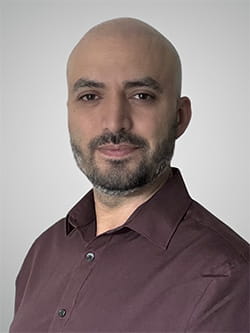
Cenk Köknar is a Lecturer in digital media design and programme director of MSc Design and Digital Media at Edinburgh College of Art, The University of Edinburgh. His research interests are user experience design, applied game design, and the expressive potential of interactive media.

Inna Yaneva-Toraman
Project Manager/Researcher at the Institute of Genetics and Cancer of the University of Edinburgh
Inna is an economic anthropologist and interdisciplinary researcher focused on the global political economy of agri-foods and fisheries. Her work explores sustainable rural livelihoods, climate change, and environmental justice in the South Pacific, Southeast Asia, and the Caribbean. Recently, she has explored gamification and game design as tools for engaging communities, fostering knowledge exchange, and supporting solution-oriented decision-making for policy engagement.

Kirsty Blair
Communications Manager & PhD Researcher at The Division of Global Agriculture and Food Systems, University of Edinburgh
Kirsty is a food systems researcher and science communicator who explores creative methods, including games and playful learning, to support sustainable and inclusive food futures. She is currently completing her PhD at the University of Edinburgh, where her research focuses on how values and framing influence transformative pathways in the UK livestock sector. Kirsty combines participatory scenario building with text mining, framing analysis, and other qualitative and quantitative techniques to unpack complex trade-offs and diverse stakeholder perspectives. She also employs playful learning approaches to promote dialogue and engagement around sustainability challenges. As Communications Manager for TRAnsforming the DEbate about Livestock Systems Transformation, a UK Research and Innovation-funded project, she leads the development of innovative strategies to translate research into impact through engaging knowledge exchange materials, public events, and interactive tools.

Dr Lucia Cervi is a qualitative scholar with a background in political science, human rights, and Corporate Social Responsibility (CSR). She is broadly interested in the intersection of social and digital aspects of sustainability, from a critical and qualitative perspective. Her work is informed by management and organisation studies, political and critical approaches to CSR, critical data studies, and critical discourse analysis. More recently, her research has been focusing on the ethical implications of digitalisation, the digital and social vulnerabilities emerging from FinTech, and the socio-political implications of technology-driven organizations and practices.

Elena Bakhanova
Independent Consultant
Elena applies participatory modelling and game design techniques to foster meaningful dialogue and social learning among stakeholders. Her PhD at the University of Technology Sydney (Australia) explored how gamification can enrich participatory methods providing better stakeholder engagement and reducing cognitive load during the modelling exercises. Prior to that, Elena also completed Erasmus Mundus Master’s in System Dynamics equipping her with systems thinking and simulation modelling skills. She is currently working on projects that leverage these approaches to support energy transition and climate resilience, with a focus on social impacts and vulnerable communities. She has worked across academia, consulting, and international development—including roles at the World Bank and universities in Australia and the Netherlands—blending research with practical recommendations. Her experience spans Australia, Europe, and Latin America, bringing cultural awareness and adaptive methods to complex challenges.

Samip Dhungel Upadhya is a PhD researcher studying sustainable consumption in fashion. His project utilises gamification as a novel method for consumer research, focusing on how consumers engage with sustainable practices. He is interested in ideas around sustainability and consumption.

Agnes Liakonera Angule
Co-founder Advisor of ClimateClan360, Kakamega Women Telecenter
Agnes Liakonera Angule is the Co-Founder of Kakamega Women Telecenter (Kenya) and the Founder of ClimateClan360, a gamified climate action platform linking youth in Kenya and Scotland. She has just completed her MSc in Data, Inequality and Society at the University of Edinburgh, where her research focuses on feminist and decolonial approaches to empowerment, data justice, and participatory monitoring and evaluation. Agnes has worked across East Africa in international development, project management, and data analysis, with a strong focus on women’s empowerment, youth employment, and digital inclusion. She is passionate about creating equitable, community-driven solutions to global challenges by blending data, technology, and storytelling.
Sigridur Tulinius
Civil Servant at Civil Service