By Sandy Louchart
Context plays an important role when gathering valuable and meaningful feedback or insight from stakeholder decision-making process, opinions and overall sentiments. It is important, for any data gathering exercise to capture unfiltered and unrestricted information when possible. There are many tested approaches and processes towards gathering meaningful information from stakeholders (i.e., interviews, focus groups, etc). While there is undeniable value in such approaches, the context of the participant must be considered when assessing the quality of the data collected. The extent to which participants allow themselves to freely express opinions and sentiments can be influenced by factors relating to the methodology used or the context of the exercise. People are conditioned to behave according to context. The same person will provide different levels of information depending on whether they are interviewed in their office building in a professional context or during an informal discussion in a neutral setting. Whilst the nature of the information provided might be similar, the granularity, level of detail or process walkthroughs might significantly differ.
There are many factors at play, too many to list here. For instance, people tend to answer the questions they are asked rather than volunteering information (even when prompted). Similarly, an interview environment might call for a professional response and prevent a freeform and opened discussion. A focus group approach, despite the best of intentions, might not be totally free from power imbalances. Bringing the right stakeholders around a table does not necessarily guarantee the quality of the data collected.
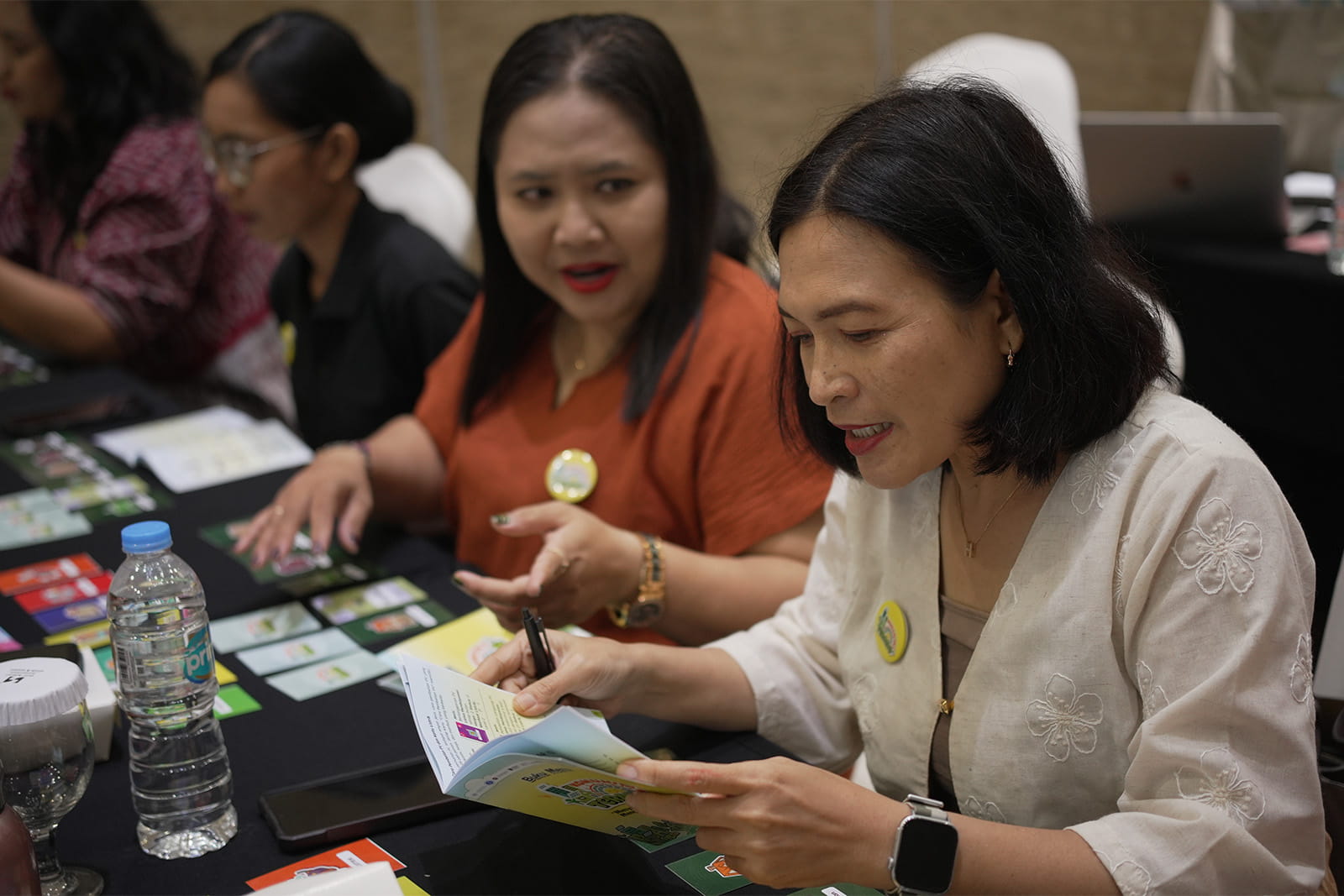
From a social science perspective, there are benefits in accessing unfiltered and unrestricted data. Purposeful play allows for the collection of data that is voluntarily provided by participants within a set of game rules designed to:
- Reduce power imbalances
- Foster freeform discussions
- Prompt focused information sharing
- Engage participant in reflecting, meaningfully, on the nature of a situation or problem, from a range of perspectives, including their own
Conceptually, the game is designed to support purposeful play and abstract out the core aspects of a situation or problem. The game aims to provide players with a context through which they can share and exchange information, opinions and sentiments without addressing specific organisational, political or social issues that are peripheral or causal to the core issue represented in the game. In essence, the stakeholders sitting around the table are not discussing specific issues within their organisation but are collectively exploring simulated solutions and strategies towards addressing actionable aspects of an underlying problem.
Purposeful games are domain agnostic and as such are applied to a wide range of interventions in healthcare, social science, climate change, education, community outreach, etc. Whilst a large part of purposeful gaming growth has been driven, in recent years, by an increased in the adoption of virtual reality (VR) in training and education, the practice extends beyond game-based learning and is prominent in many areas of research policymaking, public consultation, science and social outreach. Global purposeful games market estimations range between $14-17B and project significantly growth within the next decade [1].
From a practice point of view, irrespective of the application domain, the design of a purposeful game requires an understanding of play dynamics, data gathering techniques and the elicitation and integration of expert knowledge within a playful framework. A balance must be found between how close a game is to the domain it is representing (i.e., how far can data be abstracted from the reality of the domain) and playability. Whilst it is difficult to quantify fun, games drive engagement when players are faced with choices and decision-making.
The current public perception that purposeful games are mainly aimed at learning and education, does not reflect the wide range of intervention domains and objectives associated with purposeful gaming. For instance, games designed for public consultation research differ greatly from games designed for science communication interventions and have little in common in terms of design, requirements, the challenges they face, the type of data they collect or their desired impact.
At the GST Lab, we aim to promote the positive and transformational impact that purposeful gaming can have on social science, public consultation and the gathering of unfiltered and unrestricted meaningful data for the benefit of society. The team has developed and deployed games in areas such as climate change (i.e. flood prevention, solar adoption) and policy development and assessment in a range of varied domains (i.e. impact of tourism, local development plans, and partnership management in national parks).
The team at the GST Lab has been involved in the teaching, research and design of purposeful interventions since 2002. Combined, members of the GST lab have published over hundred articles, books and journal articles as well as leading a range of research projects in the purposeful game domain.
Reference
[1] Serious Games Market - Size & Companies, last accessed on 29/07/2026.

Sandy Louchart
Founder of Socks Off Studio